
HORIZONTAL DIRECTIONAL DRILLING
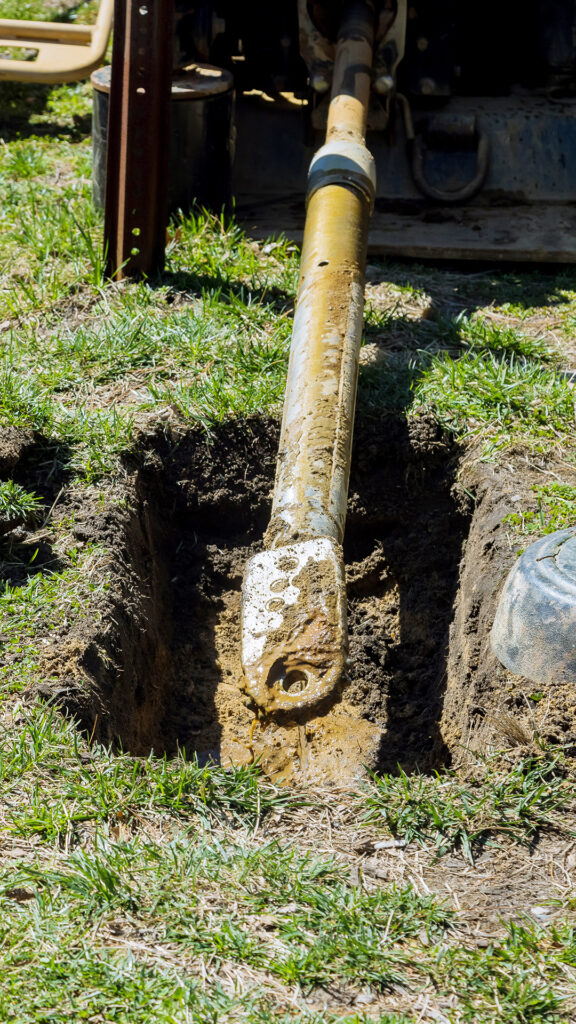
Horizontal directional drilling, or HDD, installs pipe and utility lines underground without digging a trench across the surface. Instead, a drill bores a horizontal path beneath the obstacle, whether that's a road, a waterway, or a stretch of farmland, and the line is pulled through the path once it's drilled.
In Montana, that means fewer torn-up fields, fewer closed roads, and no cutting across an irrigation ditch or stream to get a line where it needs to go. When trenching isn't practical, or isn't allowed, HDD gets the job done underneath instead of across.
What are the advantages of horizontal drilling?
Trenchless installation holds up better and costs less over the life of the project than open-cut methods, especially on jobs where surface disruption is the real expense.
Durability. Fused, continuous pipe run underground lasts longer than sectioned pipe laid in an open trench.
Faster installation. Trenchless work moves faster and disrupts less than digging and backfilling a full trench line.
Cost savings. Skipping excavation means skipping the cost of excavation: no restoring roads, driveways, or fields afterward.
Less surface disturbance. Two small pits at either end of the bore instead of a continuous open cut across the property.
Flexibility. Goes under obstacles that trenching can't cross cleanly: roads, waterways, and existing utility lines.
Wide range of conditions. Works in soft to hard clay, wet soils, and environmentally sensitive ground.
Distance. Capable of reaching 10,000–15,000 feet, and up to 25,000 feet under favorable conditions.
Have a road, waterway, or utility crossing to plan? Contact Williamson Fencing to talk through the job.
F.A.Q.
What is Horizontal Directional Drilling and when is it used?
Horizontal Directional Drilling — commonly called HDD — is a trenchless installation method that allows underground utilities, conduit, and pipe to be installed beneath obstacles without disturbing the surface above. Instead of digging an open trench, HDD uses a steerable drill to bore a precise underground path — then pulls the pipe or conduit back through the bore hole. It is the preferred method for installations that need to cross roads, driveways, sidewalks, landscaping, rivers, and other obstacles where open trenching would be disruptive, expensive, or simply not possible. Williamson Fence uses HDD to install underground conduit for gate operators and access control systems — delivering clean, professional installations that protect your property and eliminate the need for unsightly surface runs.
What are the advantages of Horizontal Directional Drilling over traditional trenching?
HDD offers significant advantages over open cut trenching in the right situations. It eliminates the need to tear up driveways, sidewalks, landscaping, or paved surfaces — saving the time and cost of restoration after the installation is complete. It causes minimal disruption to the surrounding area and can be completed faster than traditional trenching in many applications. For properties where aesthetics matter, where surface restoration would be costly, or where crossing an obstacle like a road or driveway is required, HDD is almost always the cleaner and more cost-effective solution.
Does Williamson Fence offer Horizontal Directional Drilling as part of their gate and access control installations?
Yes. Williamson Fence offers HDD as part of our complete gate operator and access control installation services. When your gate system requires power, control wiring, or conduit to cross a driveway, a road, or another obstacle, our team uses directional drilling to get it there cleanly and professionally — without cutting through your pavement or disturbing your landscaping. It is one more way Williamson Fence handles every aspect of your fencing and gate project from start to finish, so you never have to coordinate multiple contractors to get the job done right.